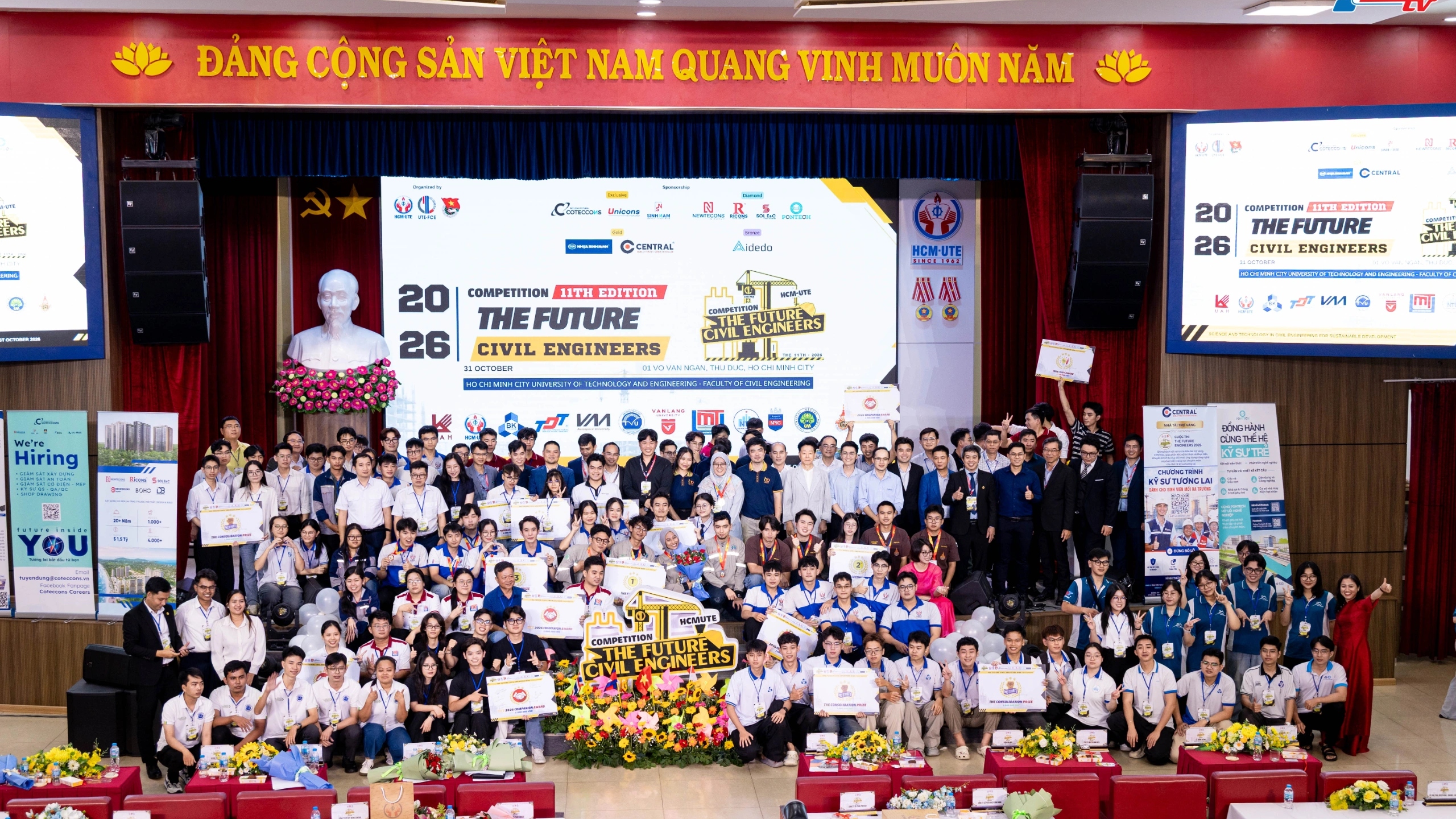
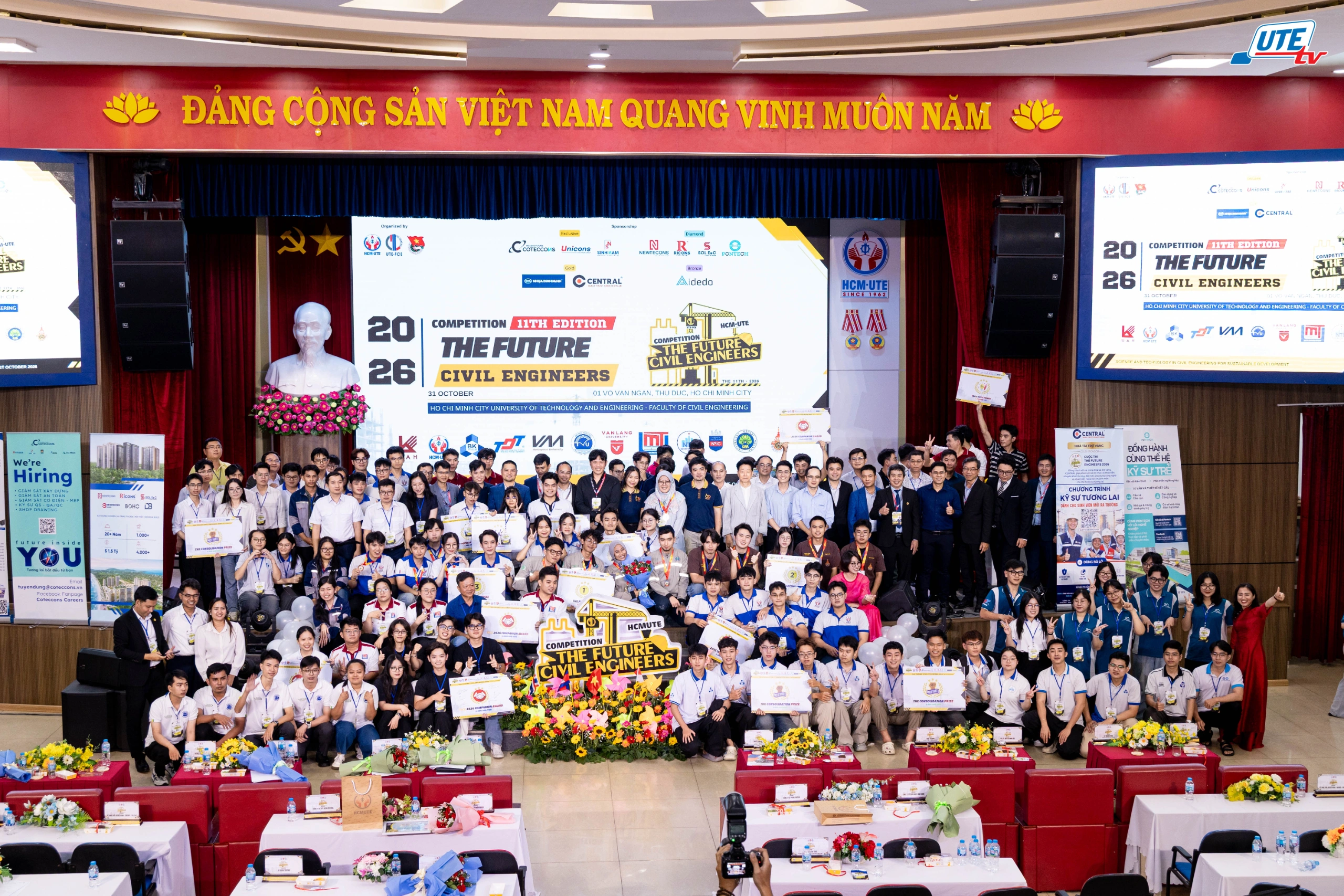
On October 31, 2026, the Faculty of Civil Engineering of Ho Chi Minh City University of Technology and Engineering (HCM-UTE, formerly Ho Chi Minh City University of Technology and Education) held the final round of the 11th The Future Civil Engineers 2026 competition. The competition brought together 24 teams with nearly 120 students from 12 universities in Vietnam and abroad, giving them a chance to connect, exchange professional knowledge and apply what they have learned to hands-on challenges in civil engineering.
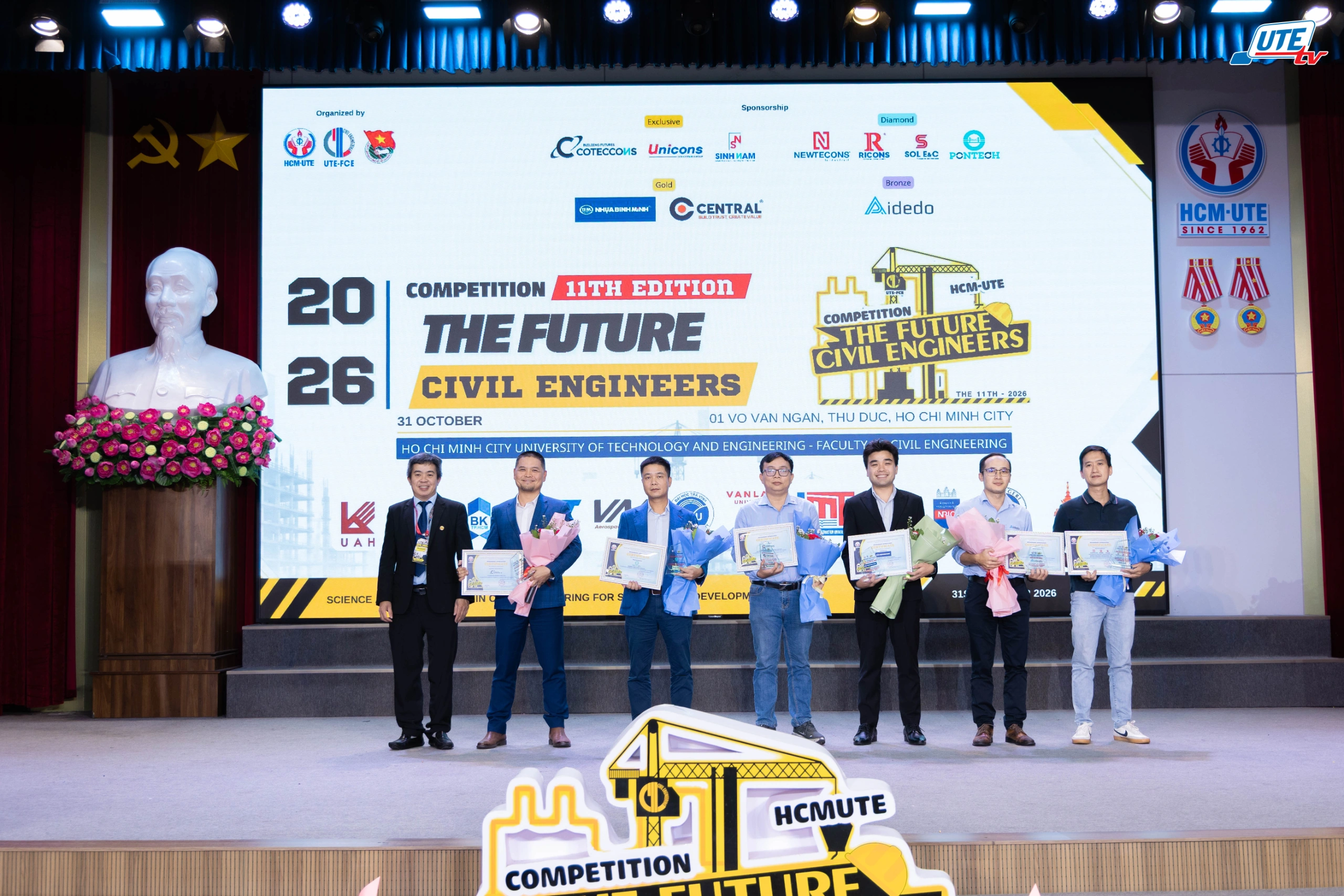
Representing HCM-UTE at the event were Assoc. Prof. Dr. Tran Vu Tu, Acting Dean of the Faculty of Civil Engineering, and Assoc. Prof. Dr. Tran Tuan Kiet and Assoc. Prof. Dr. Dao Duy Kien, Vice Deans of the Faculty of Civil Engineering. Representatives of businesses and partners also attended, including Coteccons Construction Joint Stock Company; the Newtecons – Ricons – SOL E&C ecosystem; Pontech Joint Stock Company; Binh Minh Plastics Joint Stock Company; Central Construction Joint Stock Company; and Aidedo Joint Stock Company.
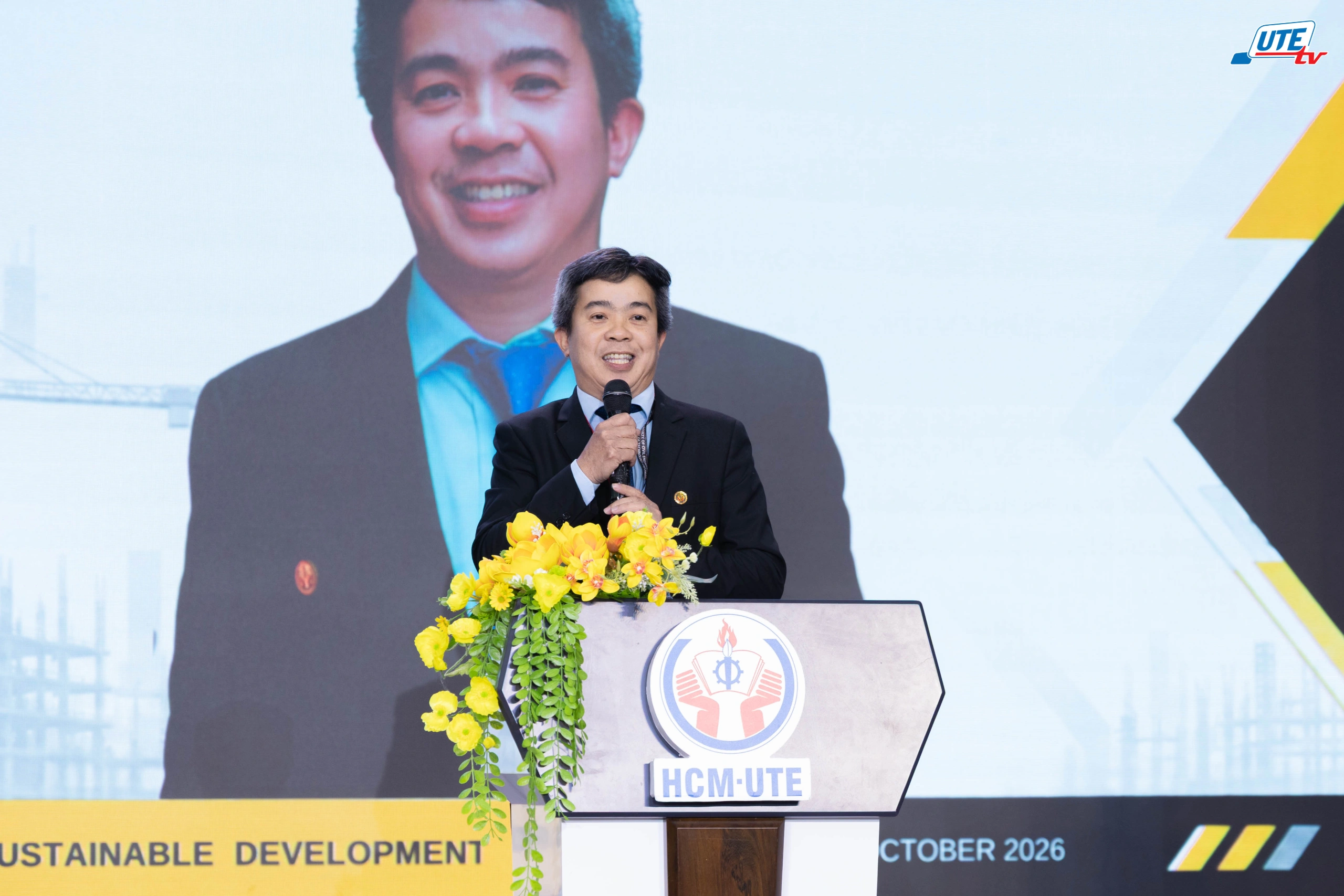
Opening the competition, Assoc. Prof. Dr. Tran Vu Tu, Acting Dean of the Faculty of Civil Engineering, welcomed the teams, lecturers, guests and business representatives. The competition aims to promote academic exchange and scientific research between HCM-UTE students and their peers from universities in Vietnam and abroad, Assoc. Prof. Dr. Tran Vu Tu said. It also gives students an environment in which to apply their specialized knowledge, sharpen practical and soft skills, and gain the experience they need for their studies and future careers.
This year’s competition brought together 24 teams from 12 universities, including teams from Cambodia, Thailand, Indonesia and many universities across Vietnam. The teams competed in three rounds: the Model Round, the Practical Skills Round and the Obstacle Course Round.
In the Model Round and the Practical Skills Round, the teams applied their specialized knowledge, creative thinking and practical skills to complete challenges set by the Organizing Committee. In the Obstacle Course Round, the teams answered multiple-choice questions, demonstrating their professional knowledge and their ability to handle situations within the time limit.
Scores from the three rounds were weighted at 40% for the Model Round, 40% for the Practical Skills Round and 20% for the Obstacle Course Round. Based on the total scores, the Organizing Committee selected the six highest-scoring teams for the Final Round, where each team had up to five minutes to present its project and five minutes to answer questions from the Jury.
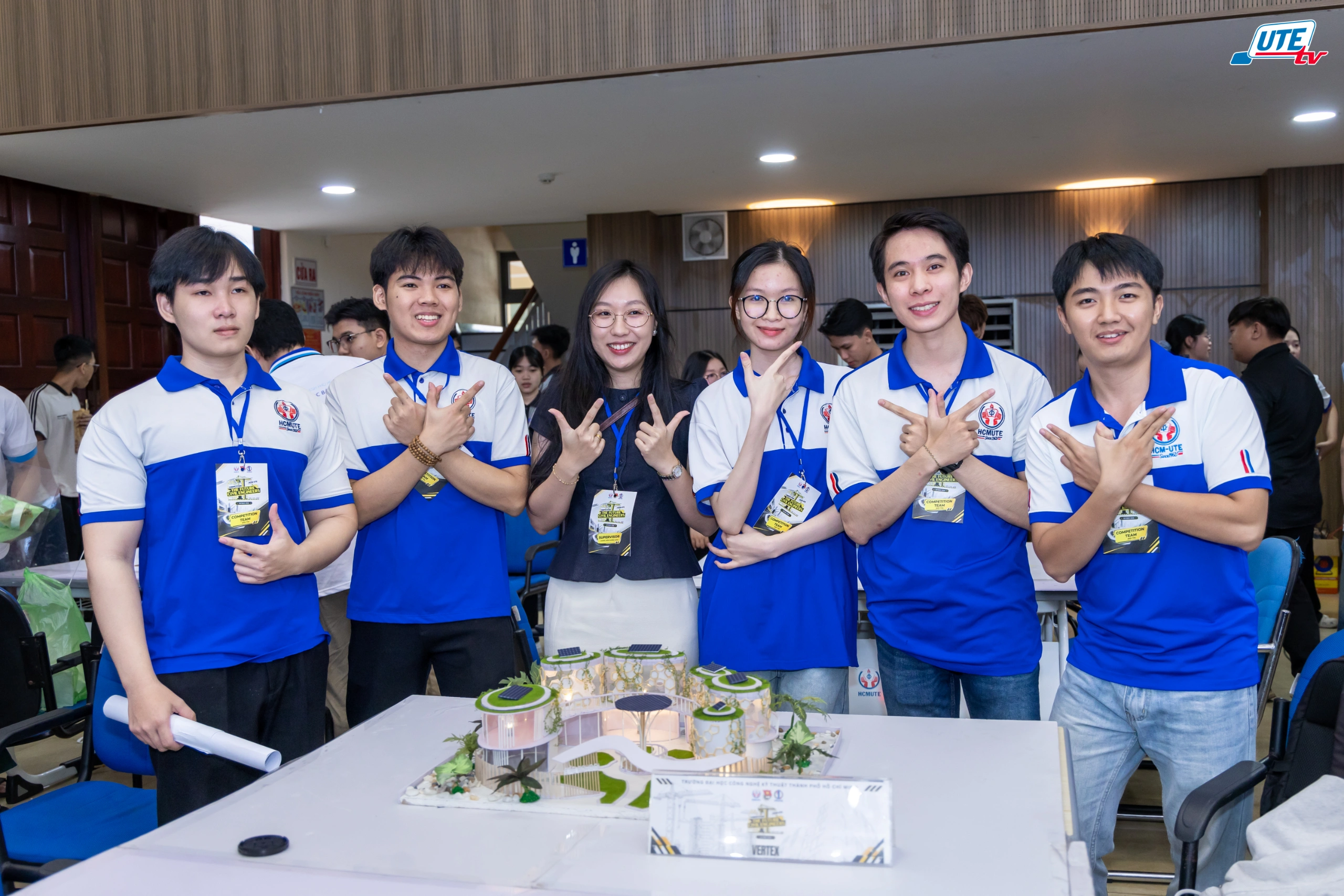
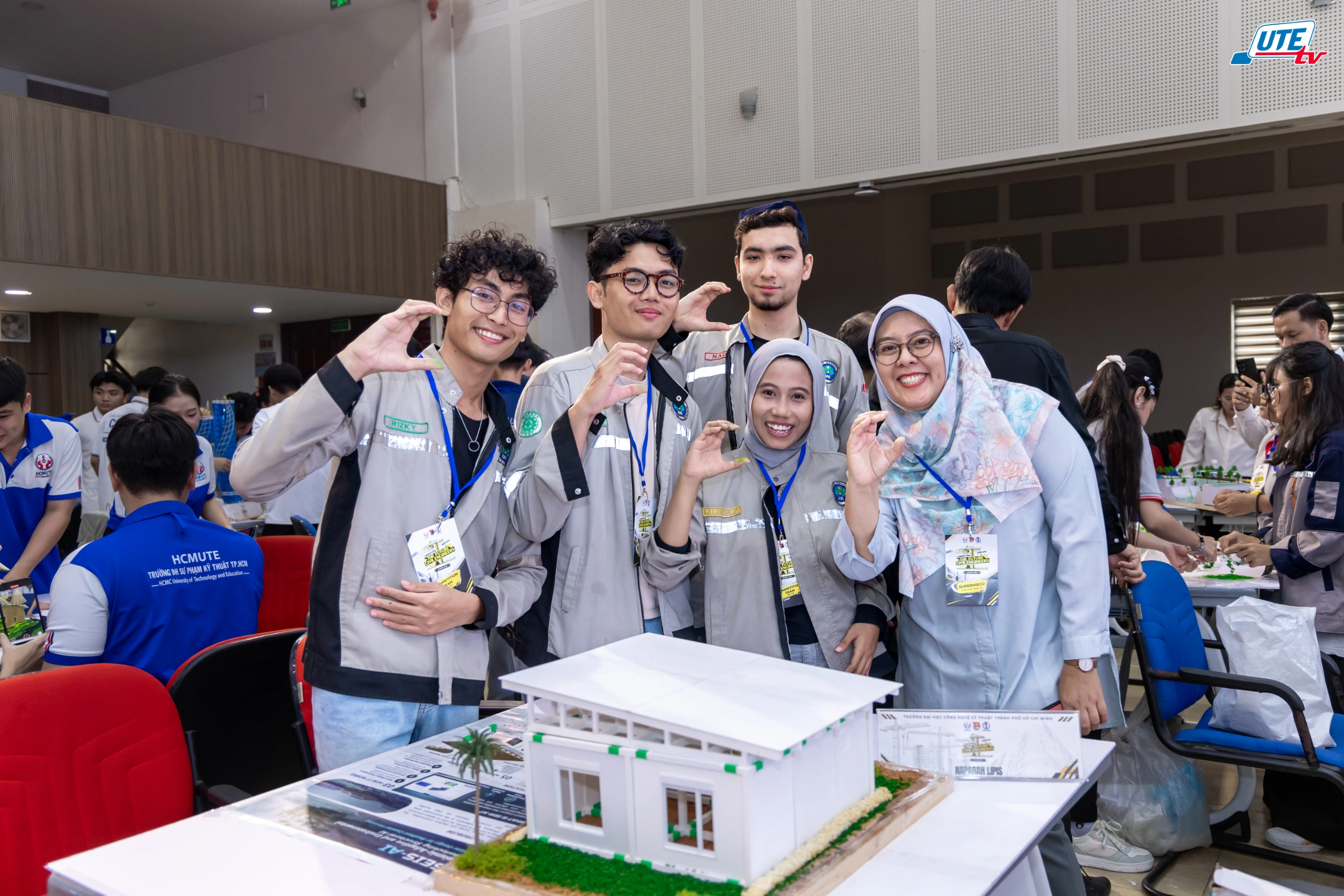
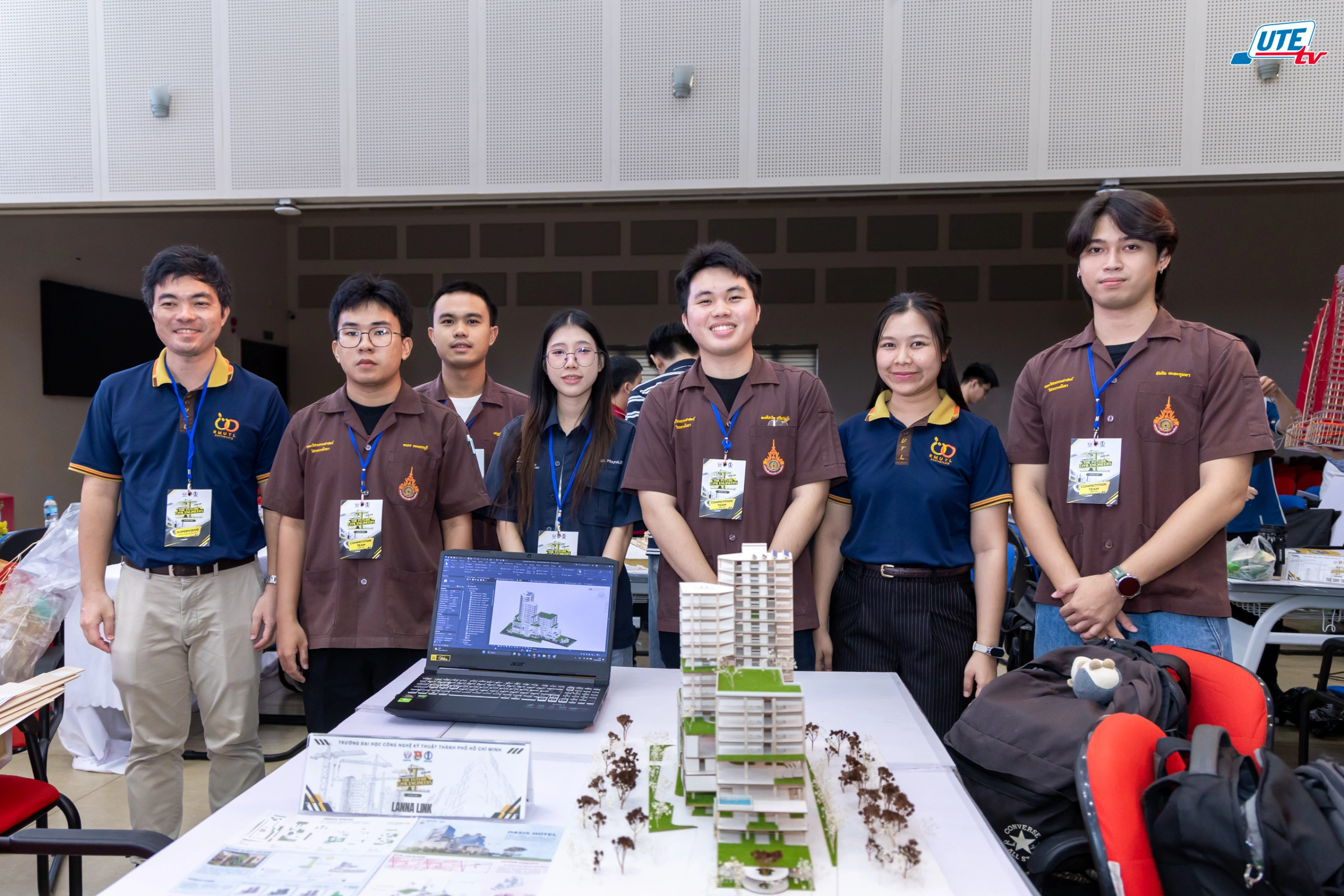
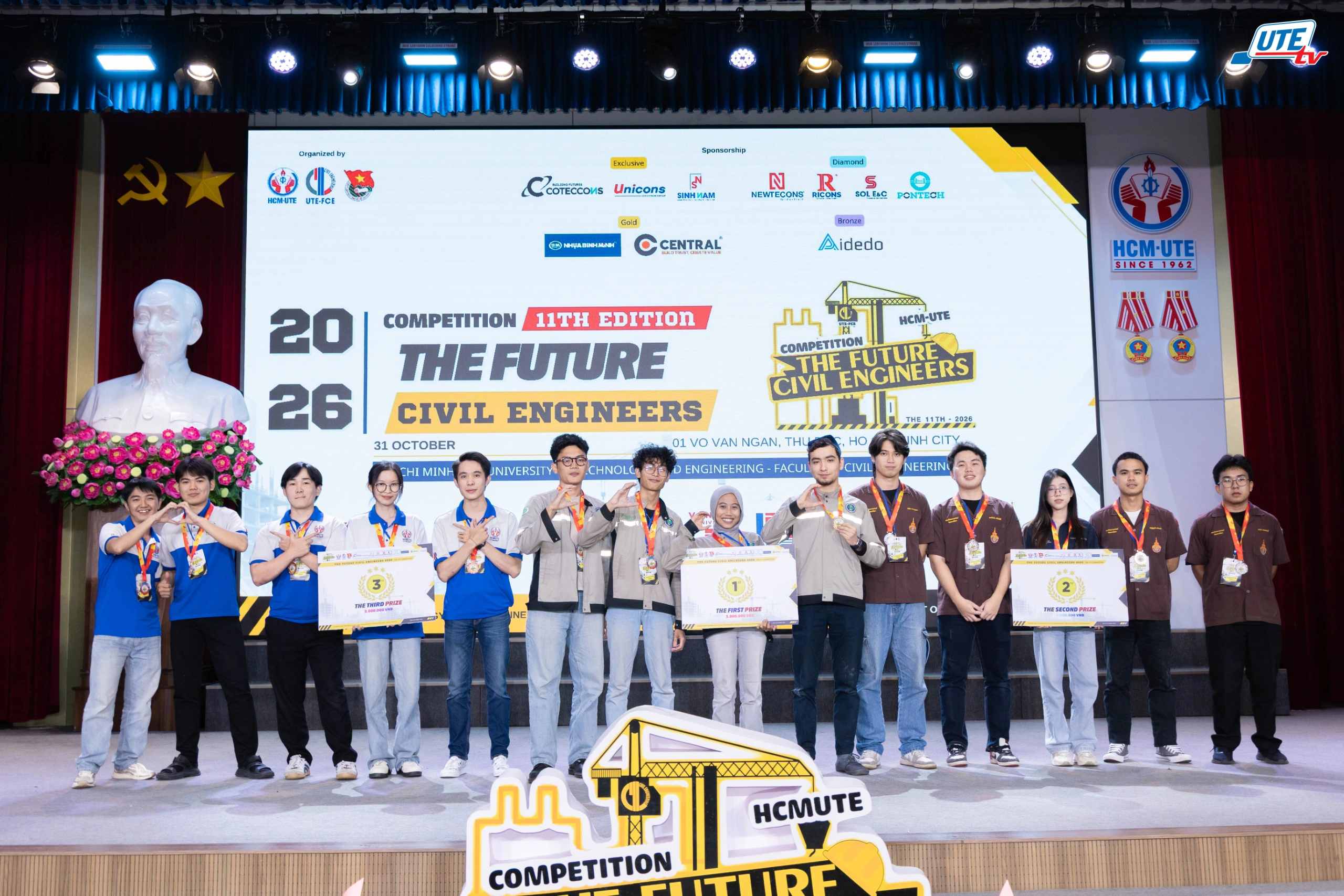
After the competition, the Organizing Committee announced the final results and presented awards to the top-performing teams:
-
First Prize: team Naparah Lipis from Universitas Negeri Malang (Indonesia);
-
Second Prize: team Lanna Link from Rajamangala University of Technology Lanna (Thailand);
-
Third Prize: team VERTEX from HCM-UTE;
-
Three Consolation Prizes: teams BKCivilTech 2026, OPTICORE and CICONS from Ho Chi Minh City University of Technology (VNU-HCM).
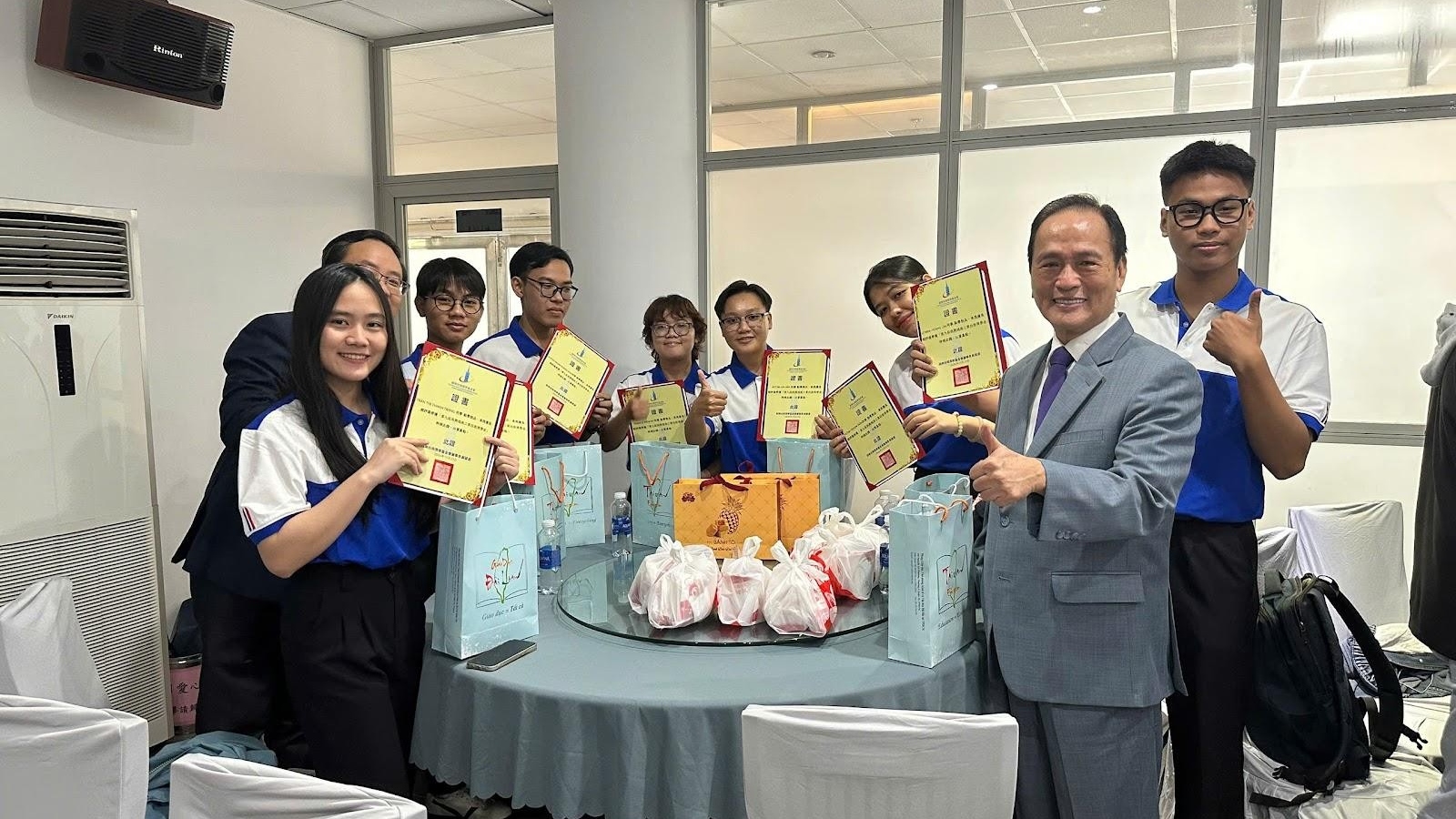
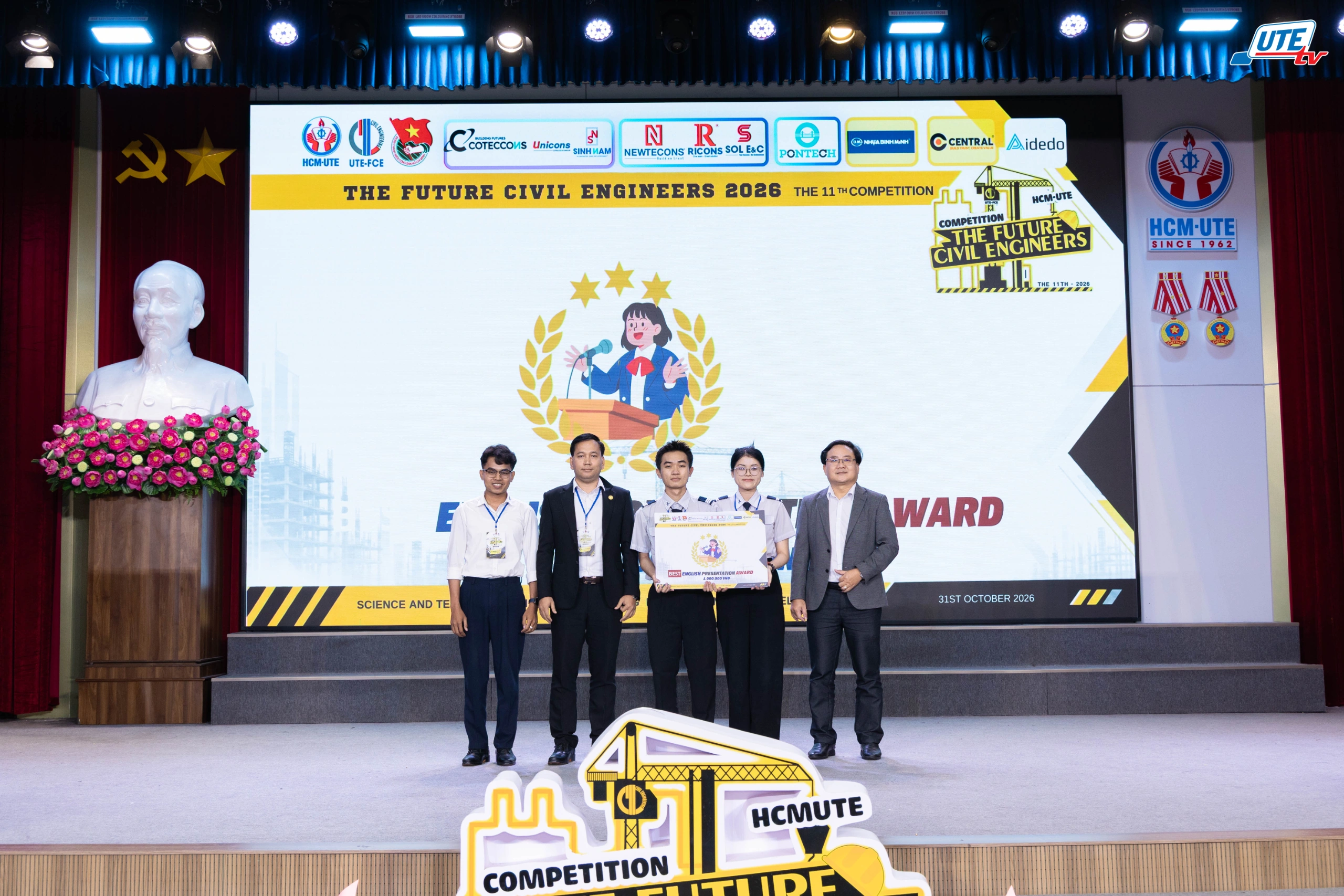
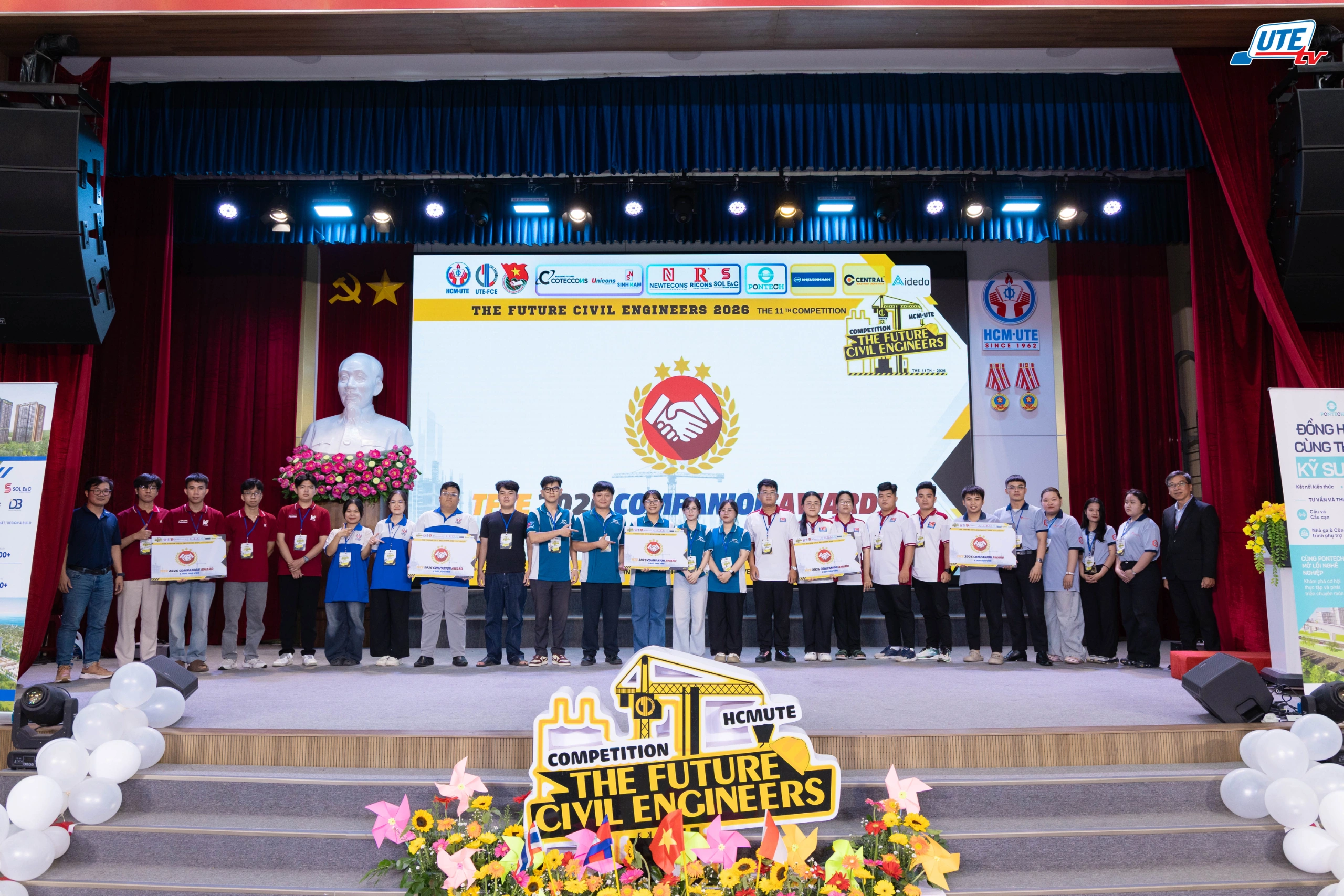
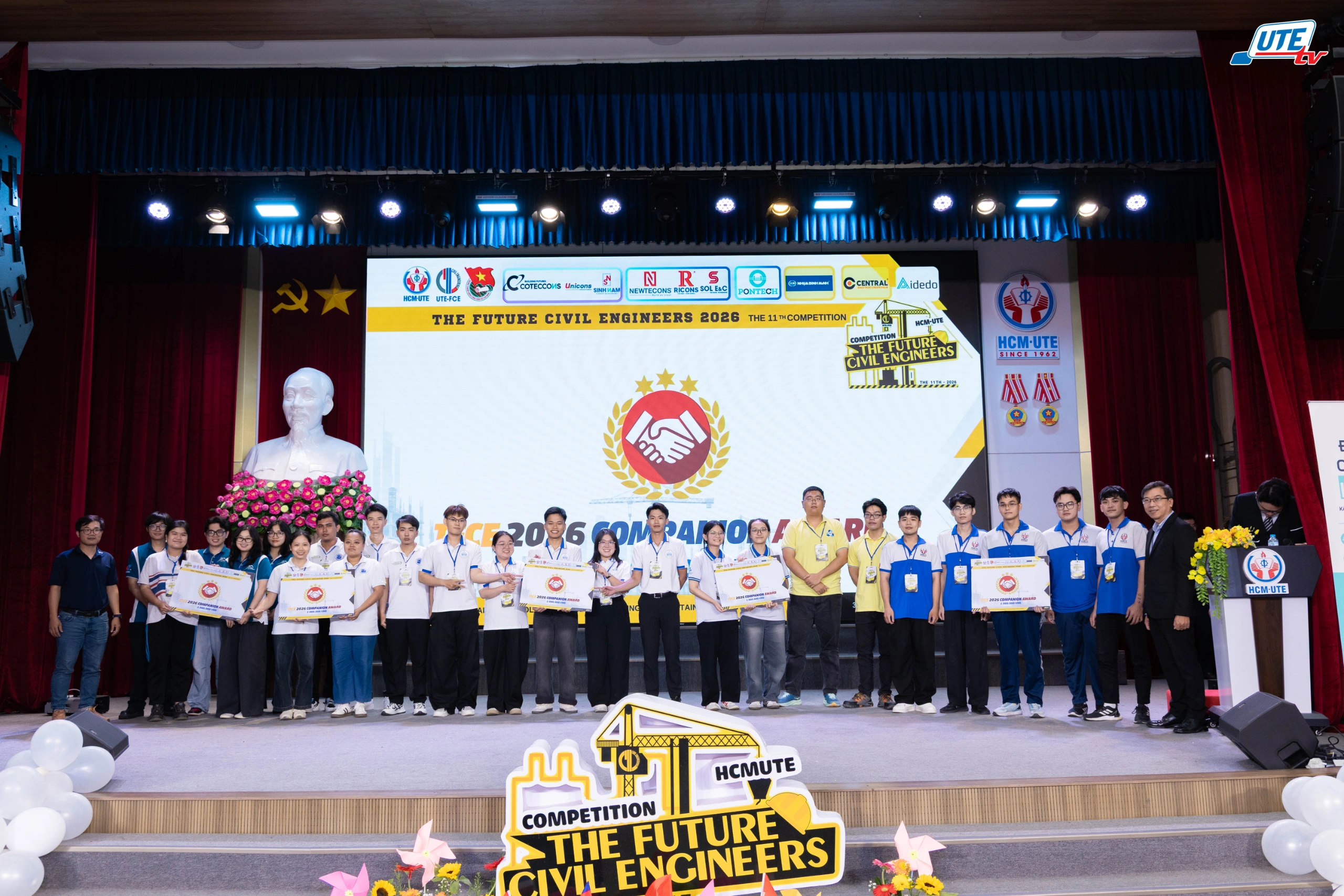
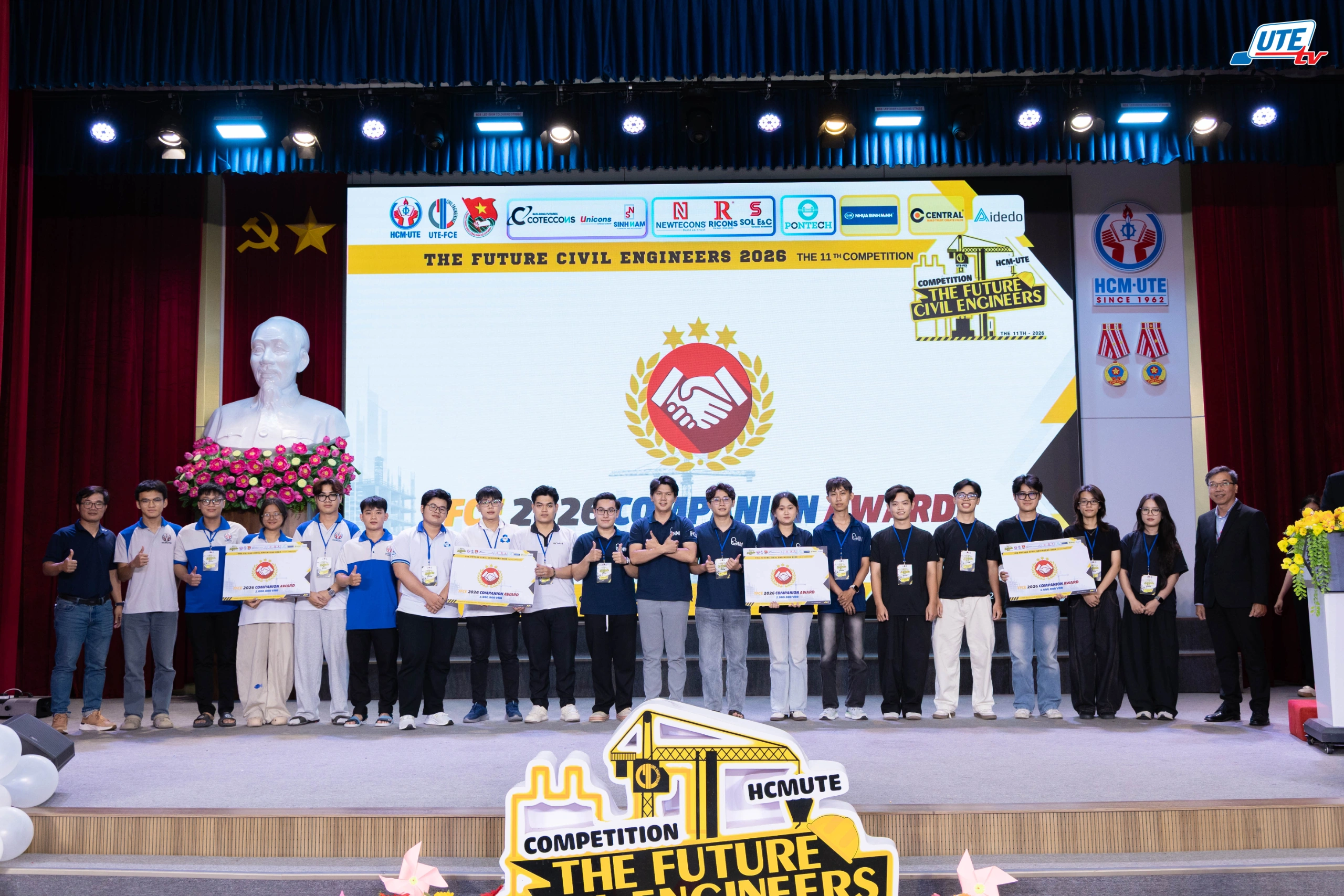
In addition to the main prizes, the Organizing Committee presented special awards recognizing each team’s distinctive strengths. The Most Popular Team Award went to team NPIC01 from the National Polytechnic Institute of Cambodia (Cambodia); the Best English Presentation Award to team VAA Flight Crews from the Vietnam Aviation Academy (Vietnam); the Most Creative Team Award to team RRCT from the University of Architecture Ho Chi Minh City (Vietnam); and the Best Style Award to team NPIC02 from the National Polytechnic Institute of Cambodia (Cambodia). The remaining 14 teams received Participation Awards in recognition of their involvement and efforts throughout the competition.
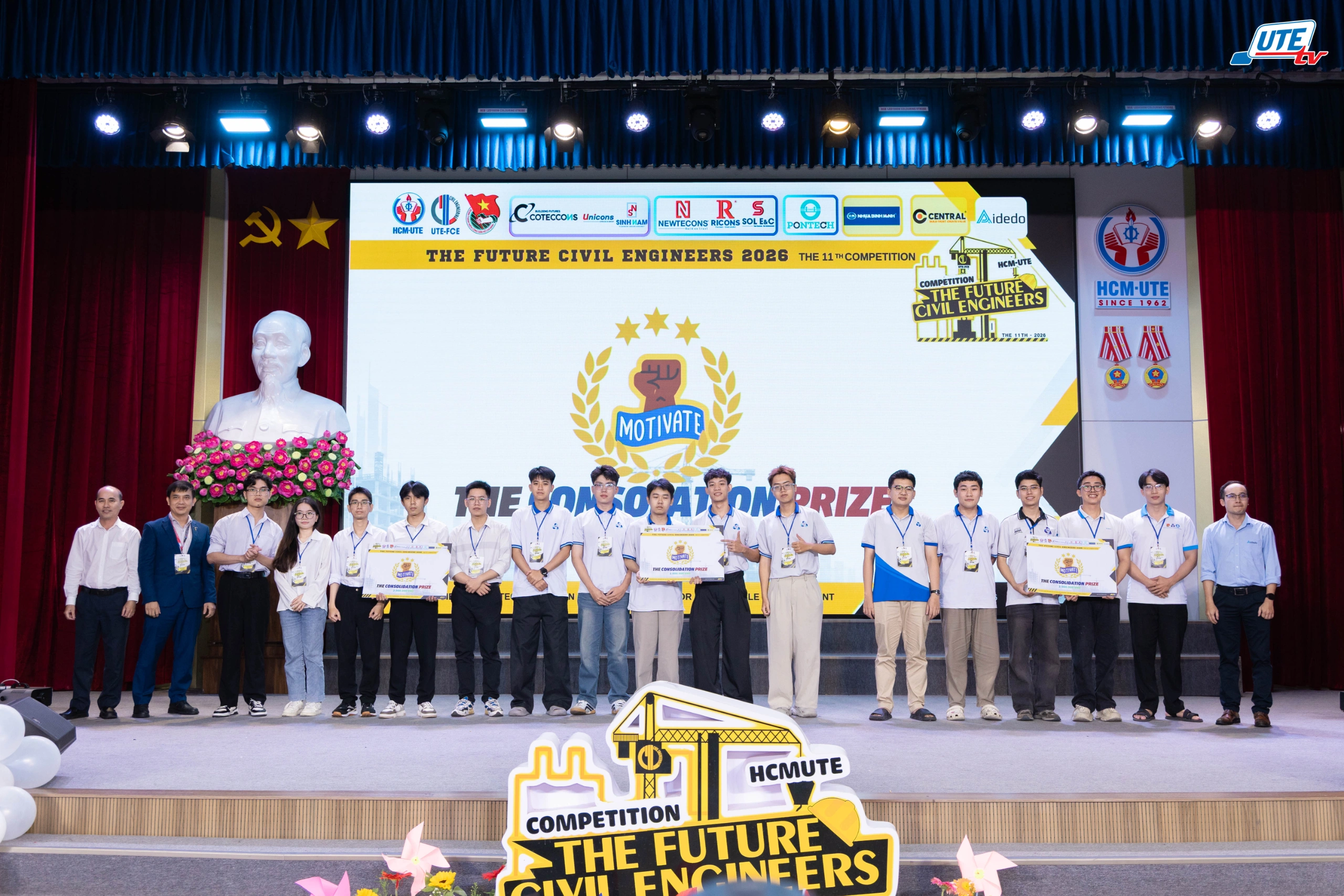
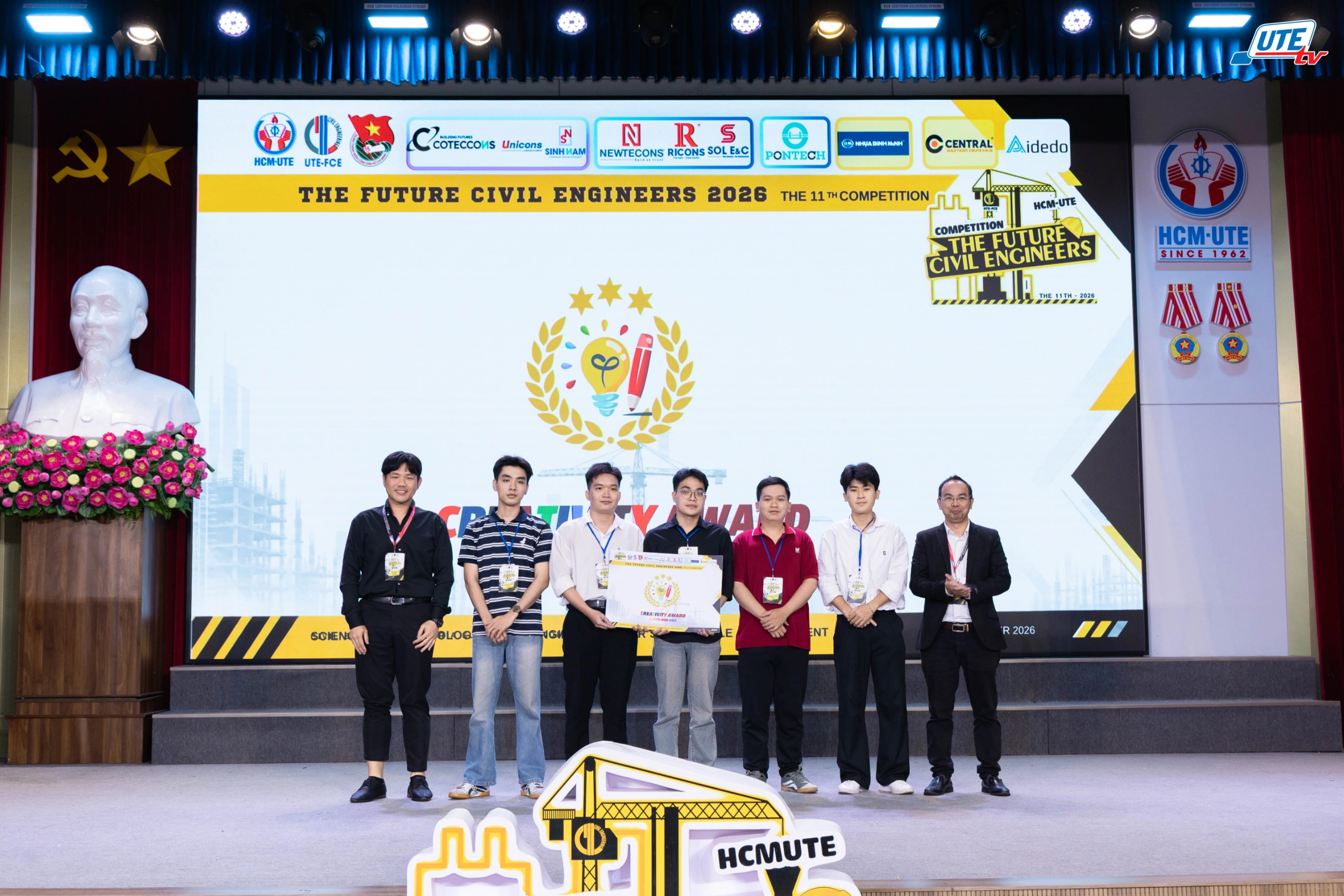
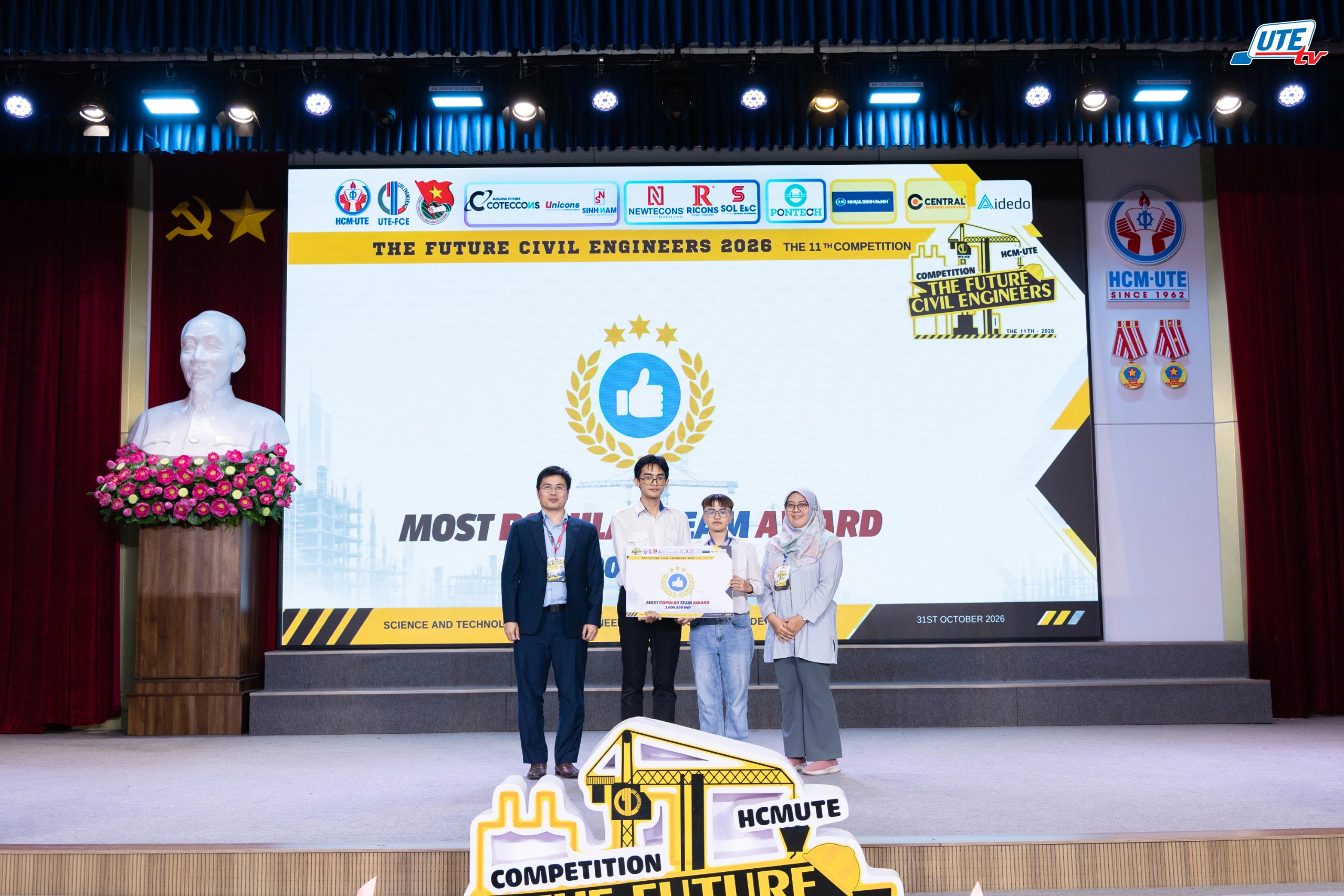
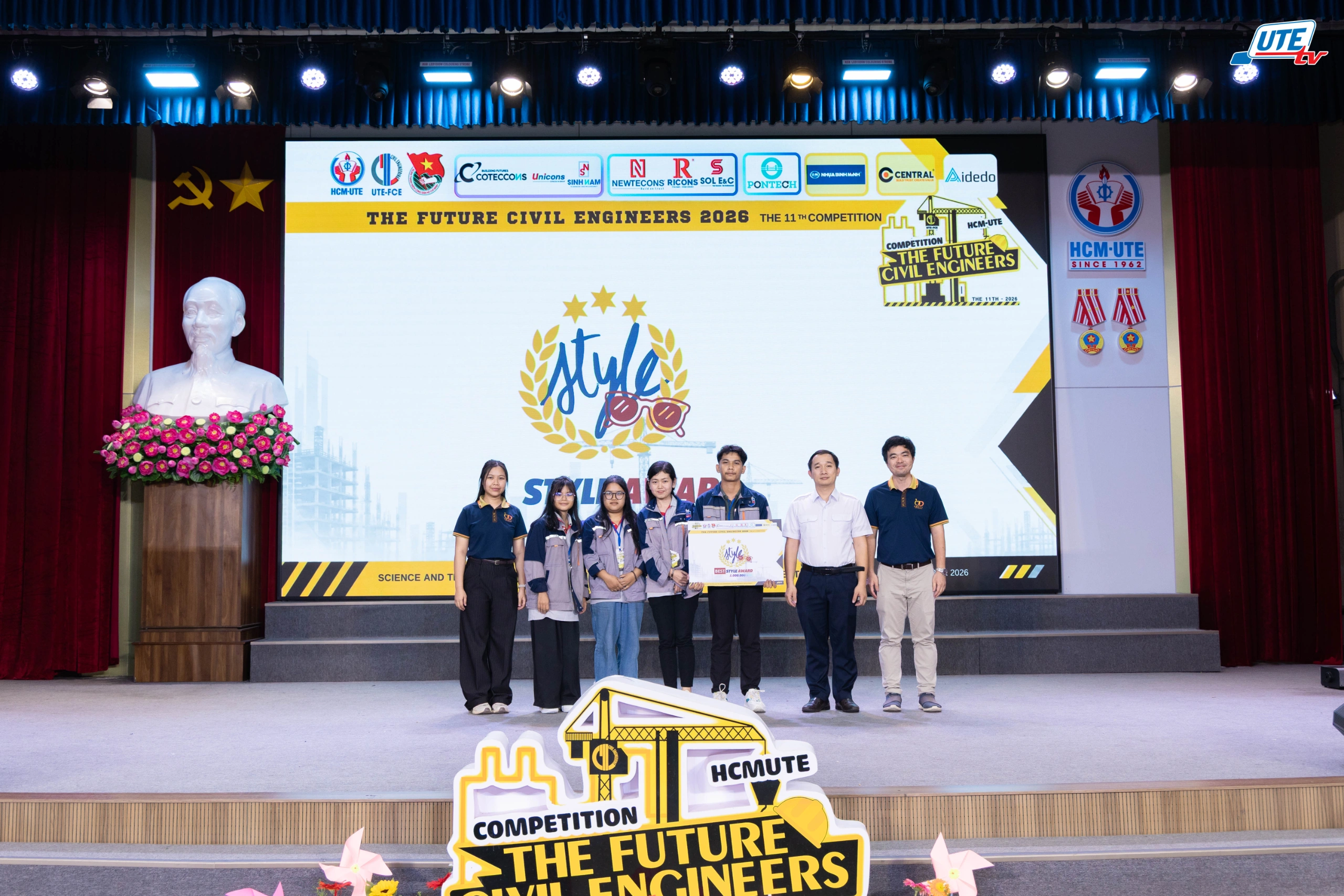
The 11th The Future Civil Engineers 2026 concluded with notable results, continuing to provide an academic platform for civil engineering students while expanding exchange between universities in Vietnam and abroad. Through professional challenges and hands-on activities, students had the opportunity to test their knowledge, build their skills and gain insight into the practical demands of the profession. The participation of universities, experts and businesses also helped strengthen the link between training and practice, creating more opportunities for exchange and cooperation in the construction sector.
About the University’s Name Change: On December 26, 2025, the Prime Minister of Vietnam issued Decision No. 2809/QĐ-TTg, officially renaming Ho Chi Minh City University of Technology and Education to Ho Chi Minh City University of Technology and Engineering (HCM-UTE). The new name reflects the University’s multidisciplinary development strategy, its strengths in technology and engineering, and its current institutional stature. Before 2007, the University was Vietnam’s leading institution for technical teacher education. Following changes to the national higher education program classification system in 2007, the University expanded its focus to technology, engineering, and related disciplines. The name change aligns with Vietnam’s Higher Education Network Development Plan for 2021-2030 with a vision toward 2050, addresses the demand for high-quality human resources in the digital transformation era, and reaffirms HCM-UTE’s role as a national key university in technology and engineering. |
|---|
Text: Nhat Tan – Translation: PP