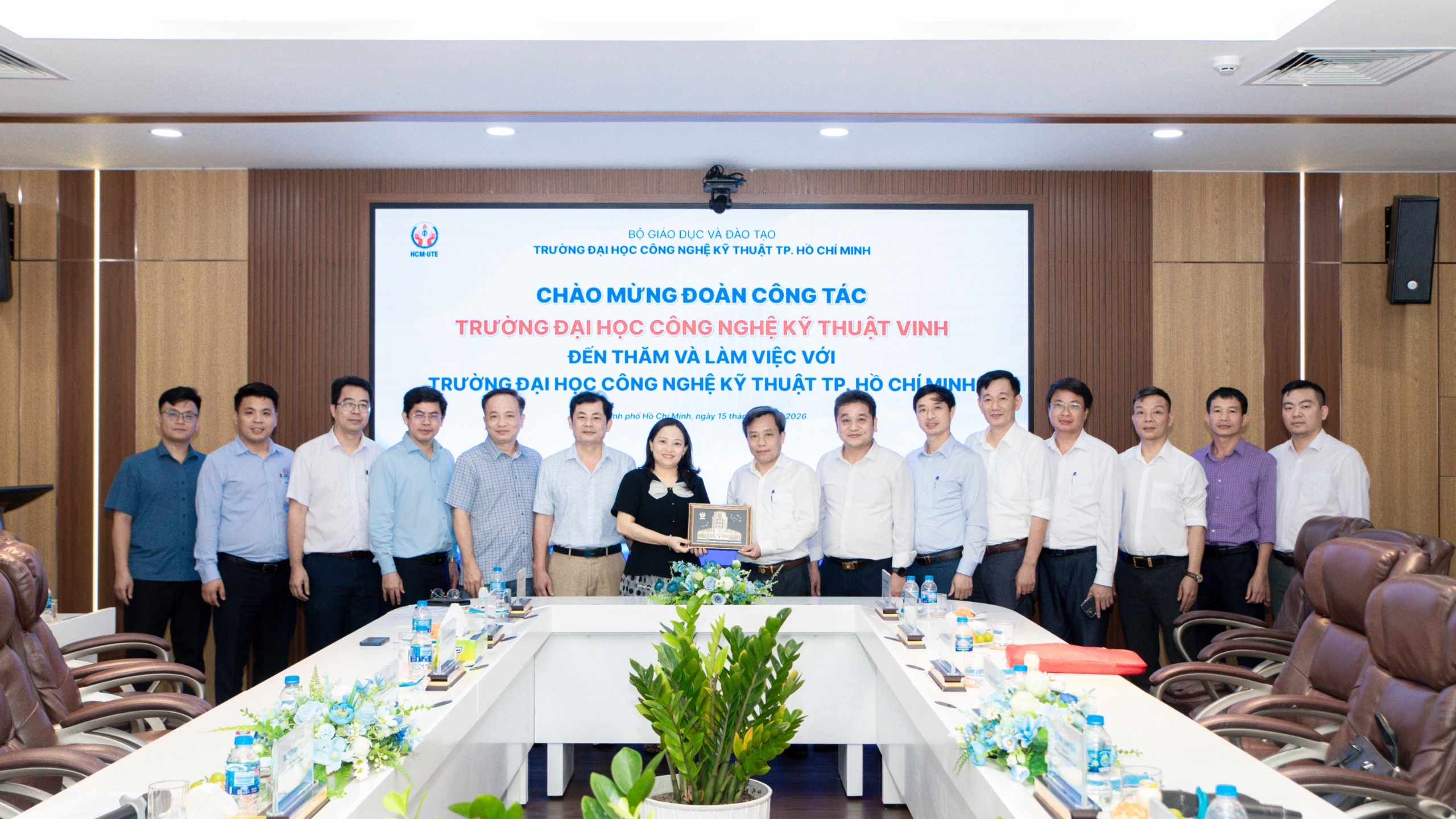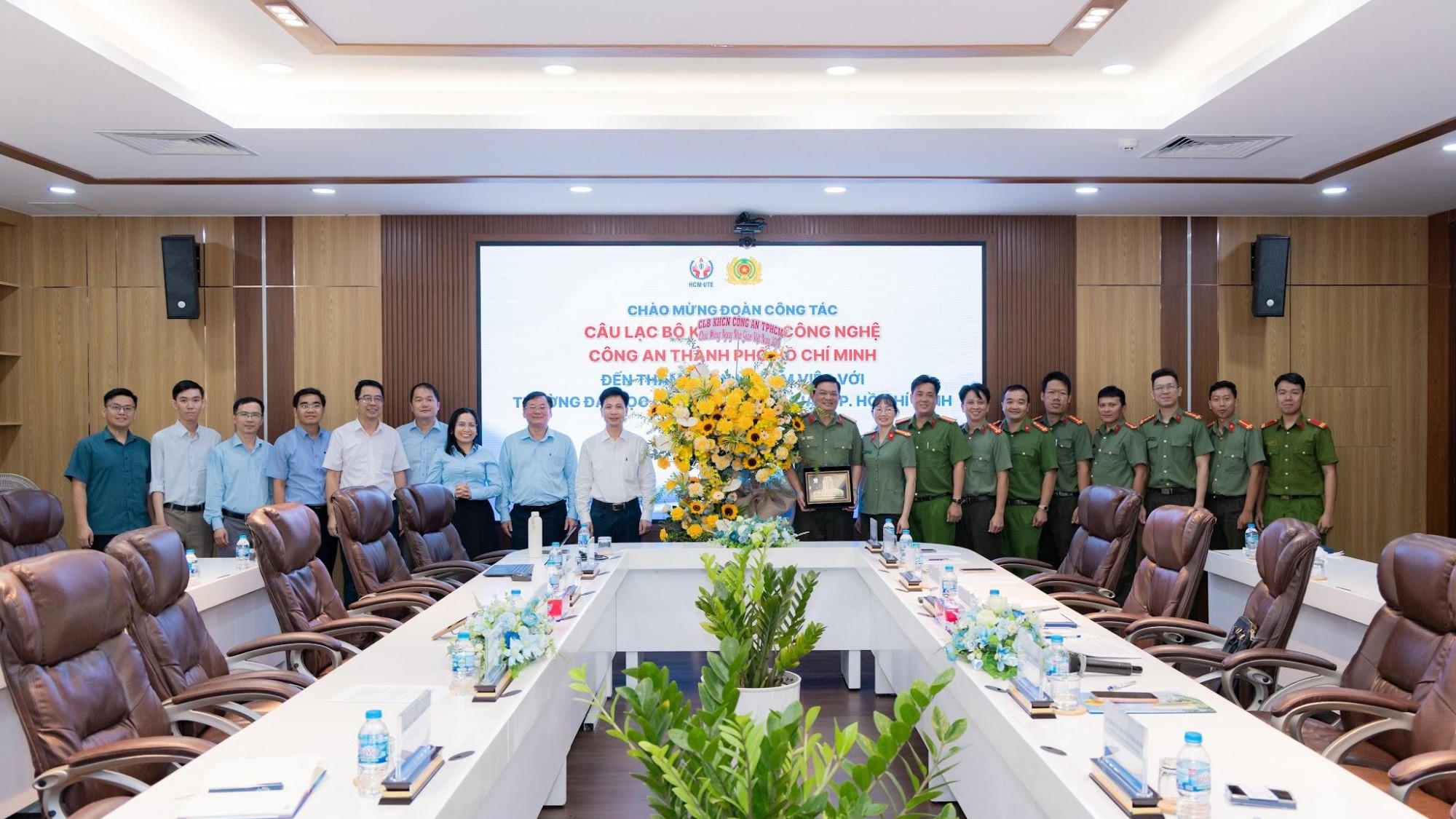
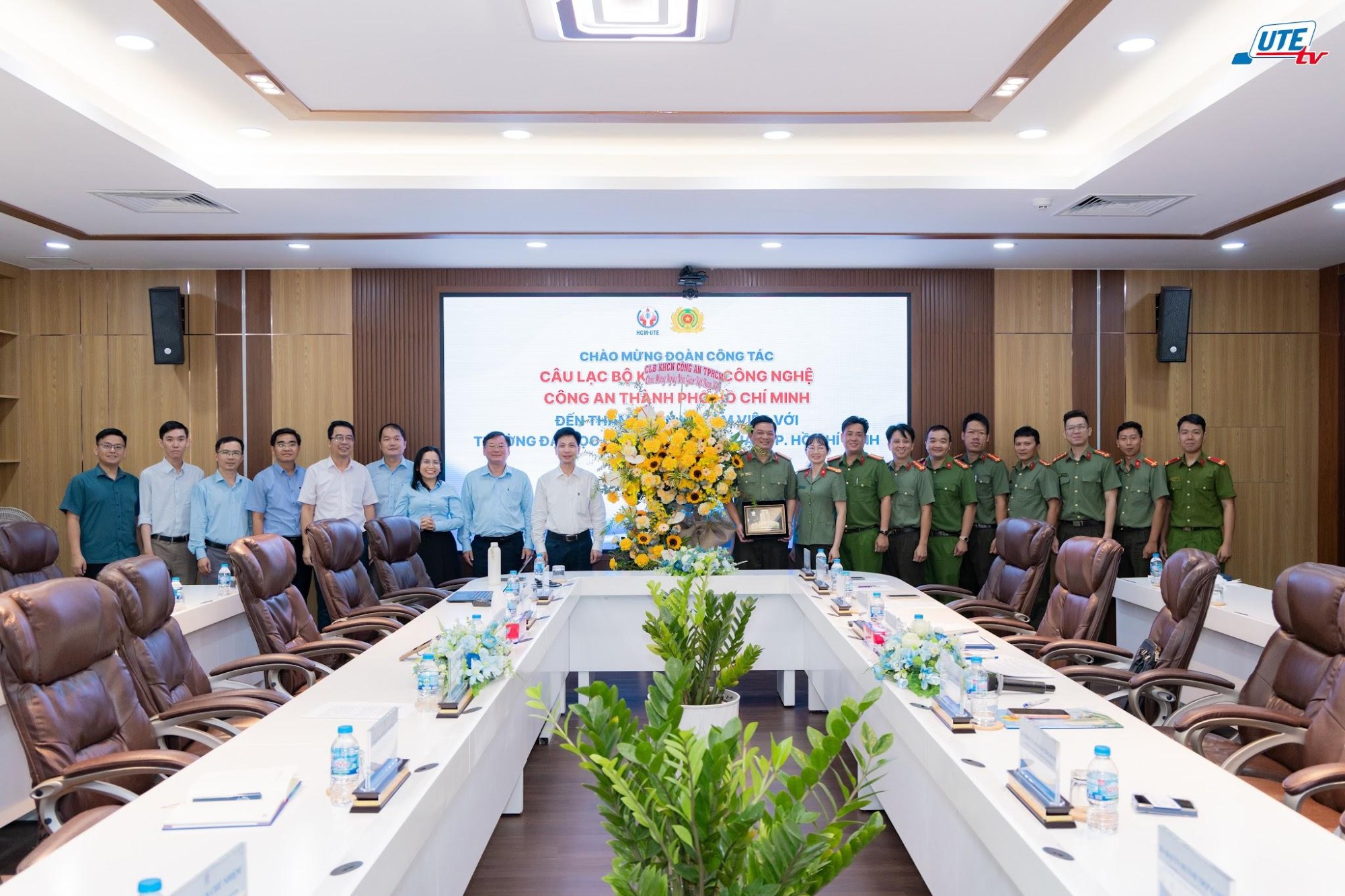
On the morning of November 12, 2026, in Meeting Room 1, Ho Chi Minh City University of Technology and Engineering (HCM-UTE, formerly Ho Chi Minh City University of Technology and Education) welcomed a delegation from the Science and Technology Club of the Ho Chi Minh City Police, led by Senior Colonel Tran Manh Ha, for a working session. This was the Club’s first visit and working session at an outside institution since its establishment.
The HCM-UTE representatives welcoming the delegation were Assoc. Prof. Dr. Chau Dinh Thanh, Vice President of the University; Assoc. Prof. Dr. Truong Nguyen Luan Vu, Dean of the Faculty of Mechanical Engineering; Assoc. Prof. Dr. Vu Van Phong, Director of the Office of Science and Technology; and Assoc. Prof. Dr. Pham Ngoc Son, Vice Dean of the Faculty of Electrical and Electronics Engineering, together with lecturers from the research groups. The delegation included Senior Colonel Tran Manh Ha, Head of the Telecommunications, Information Technology and Cryptography Division of the Ho Chi Minh City Police and Chair of the Club; Major Nguyen Cong Danh, Deputy Chief of Thu Duc Ward Police; and Club members serving in various units of the City Police.
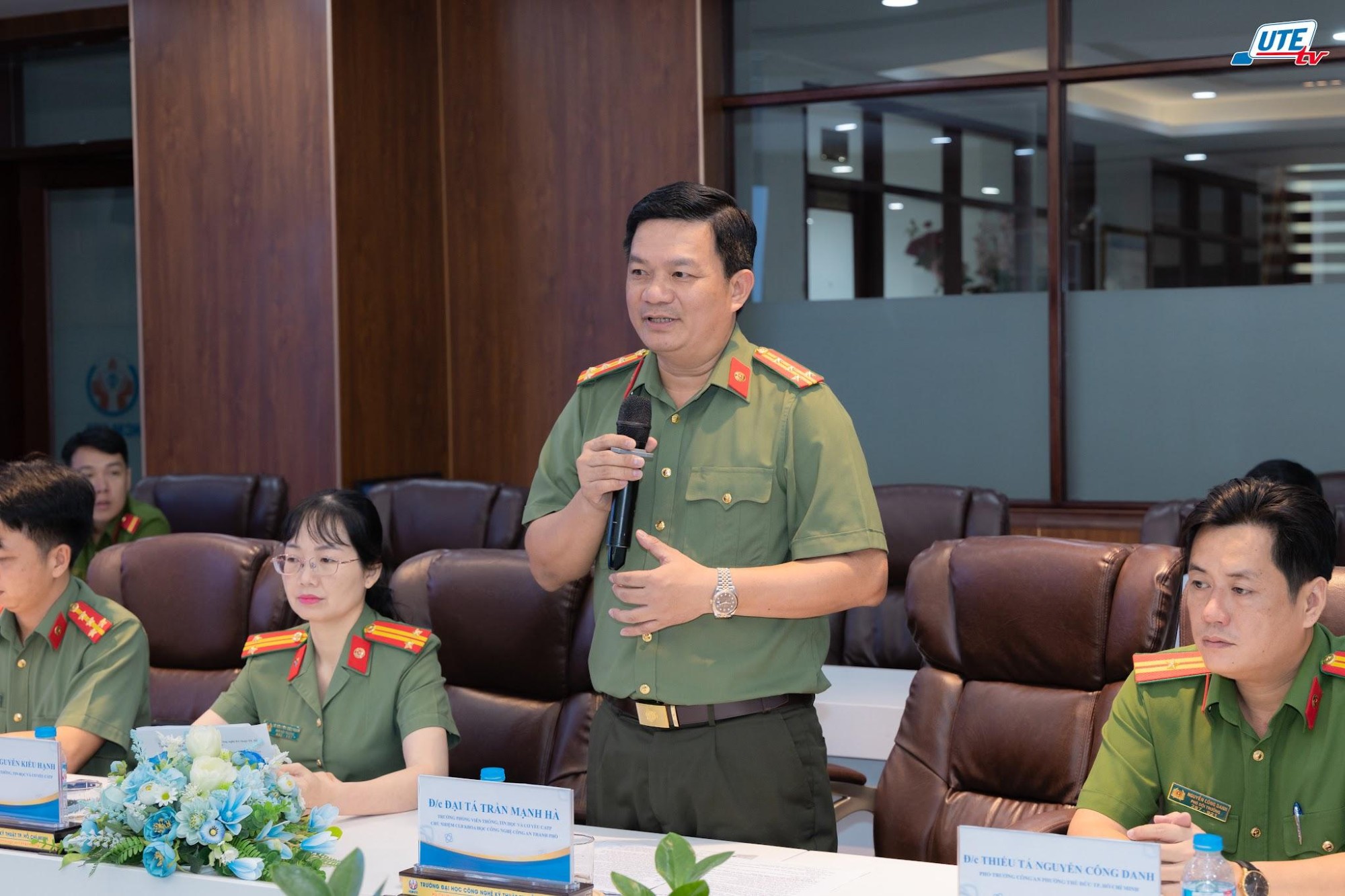
Speaking about the purpose of the visit, Senior Colonel Tran Manh Ha said the Science and Technology Club of the Ho Chi Minh City Police was established in October 2026, bringing together officers with expertise in science and technology who serve in various units and localities. With a focus on promoting research, cooperation and technology transfer in support of digital transformation, the Club wished to learn about HCM-UTE’s research results, technology development capacity and potential for cooperation. Research and development of unmanned aerial vehicles (UAVs) is among the University’s strengths.
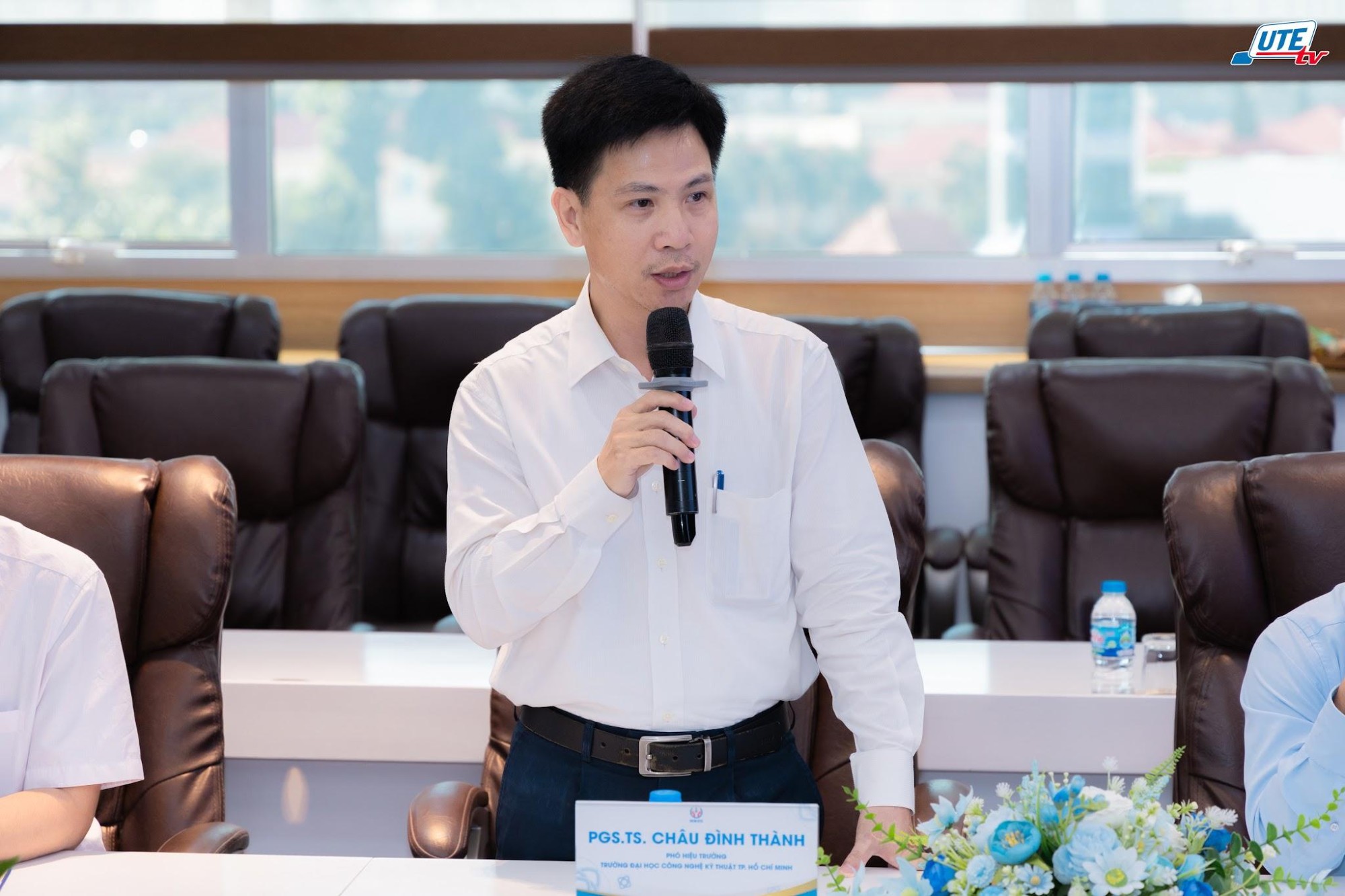
In his welcoming remarks, Assoc. Prof. Dr. Chau Dinh Thanh said HCM-UTE prioritizes application-oriented research, product development and intellectual property registration. This direction is in line with Politburo Resolution No. 57-NQ/TW, dated December 22, 2024, on breakthroughs in science, technology, innovation and national digital transformation. In that spirit, the University hopes to work alongside the City Police on technology challenges that serve digital transformation, urban management and the public interest.
At the working session, the two sides discussed their strengths, research directions and potential for collaboration in science and technology, and proposed developing a cooperation program on UAV research and applications to build on their expertise and expand real-world use.
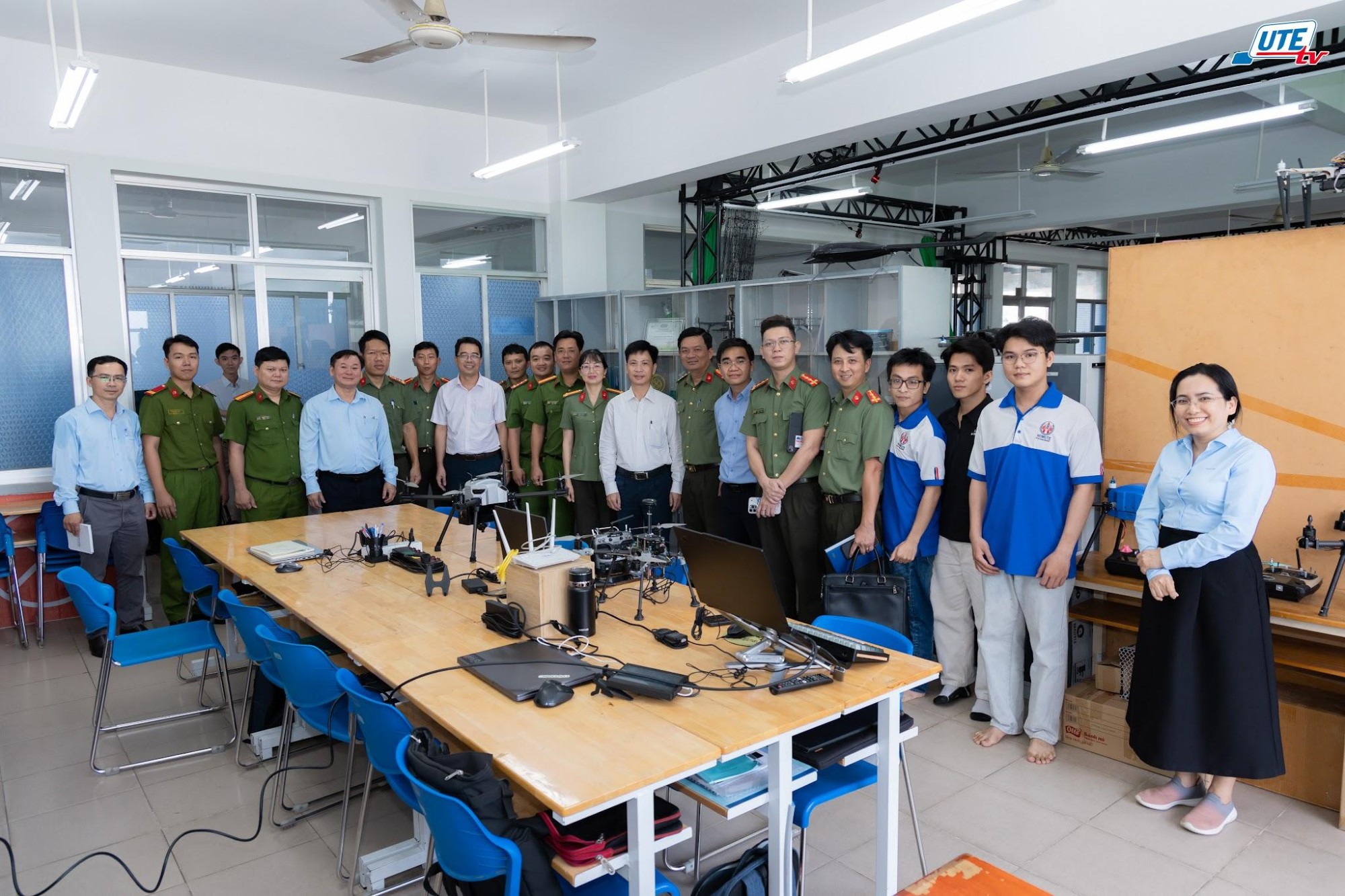
As part of the visit, the delegation toured laboratories as well as research and fabrication spaces at the Faculty of Mechanical Engineering, viewed UAV models designed and assembled by the University’s lecturers and students, and were briefed on the testing process.
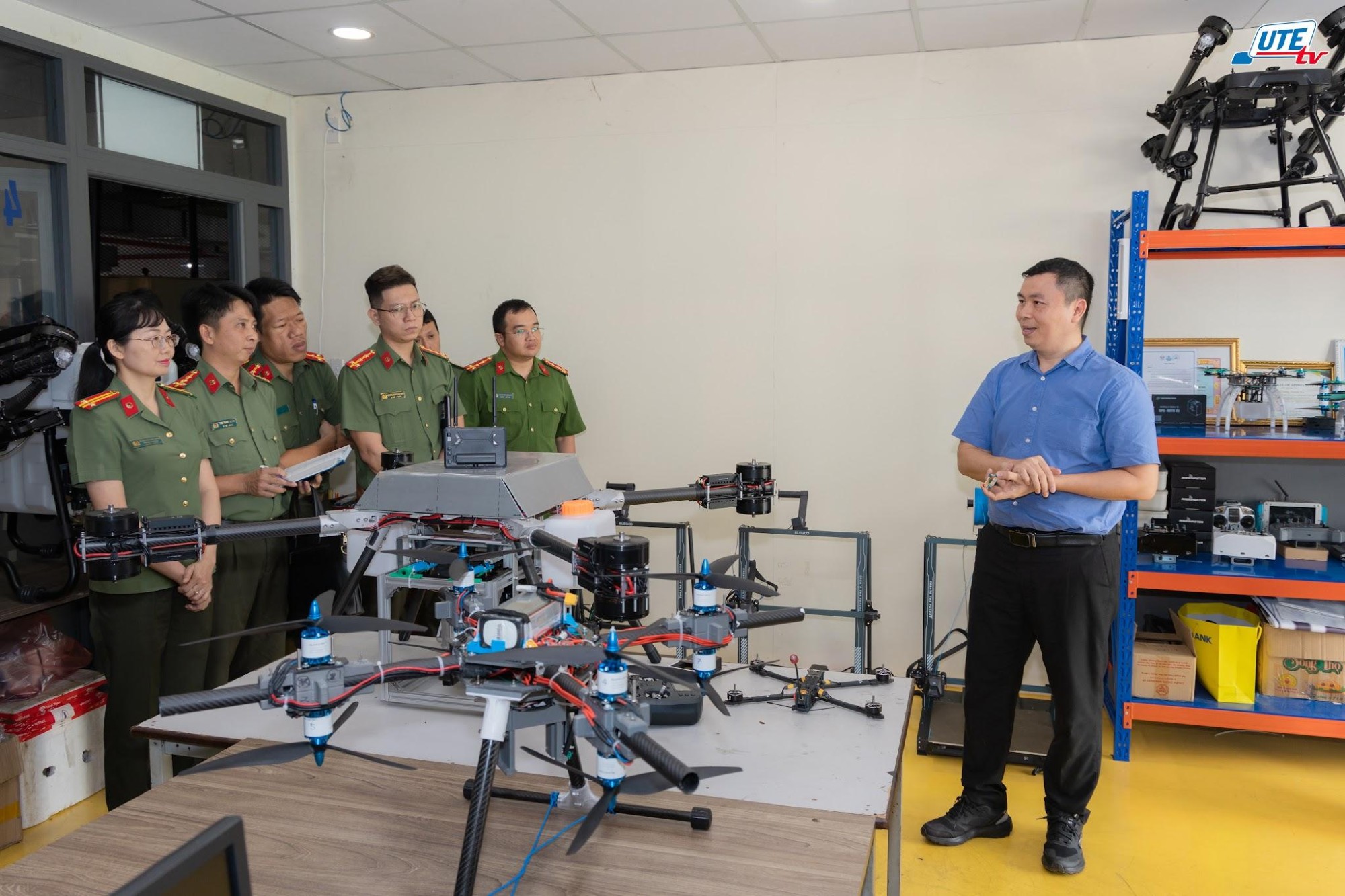
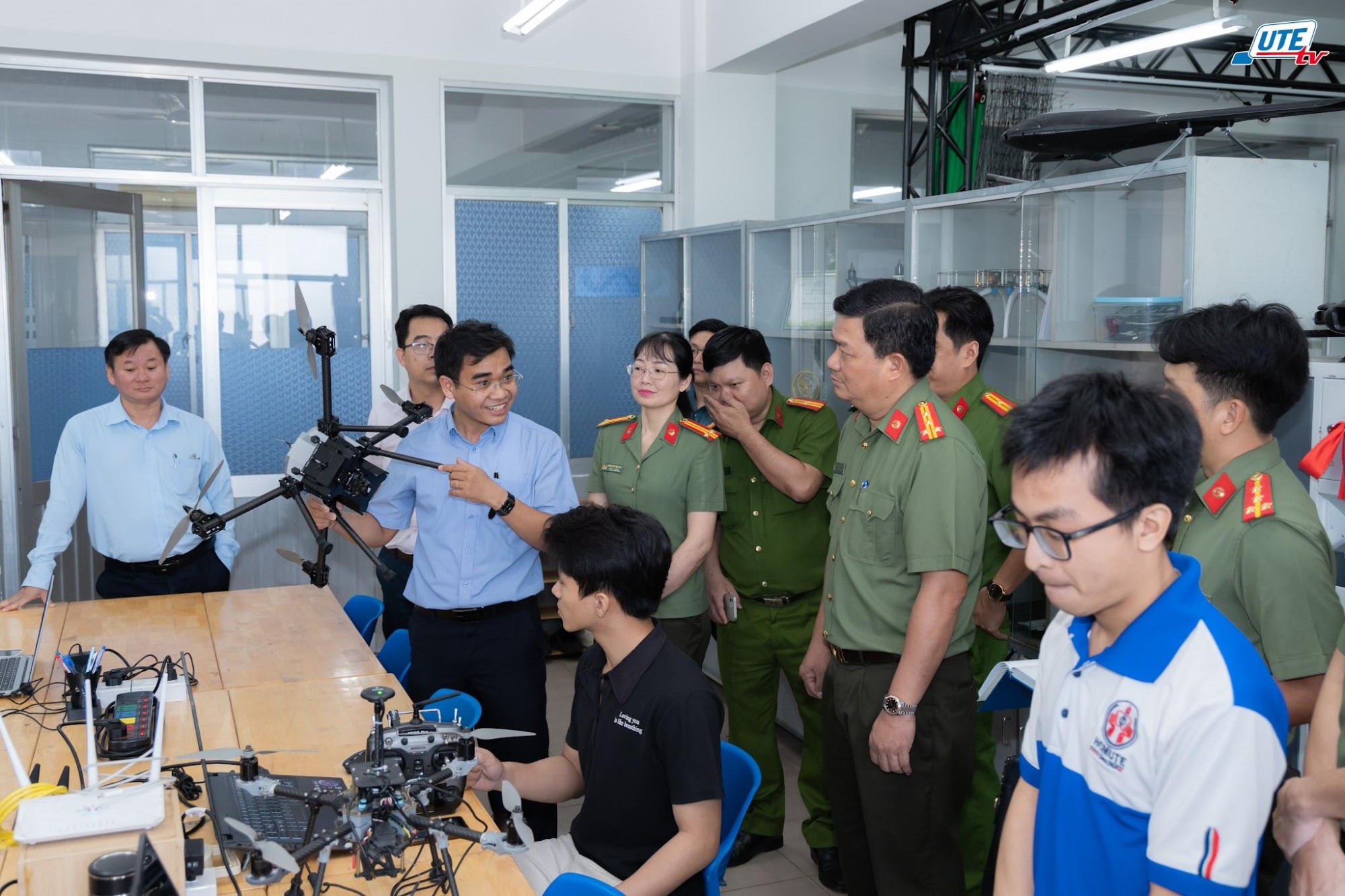
There, Dr. Ha Le Nhu Ngoc Thanh, a lecturer in the Faculty of Mechanical Engineering who is in charge of the UAV Laboratory, also shared information about the laboratory and its research group.
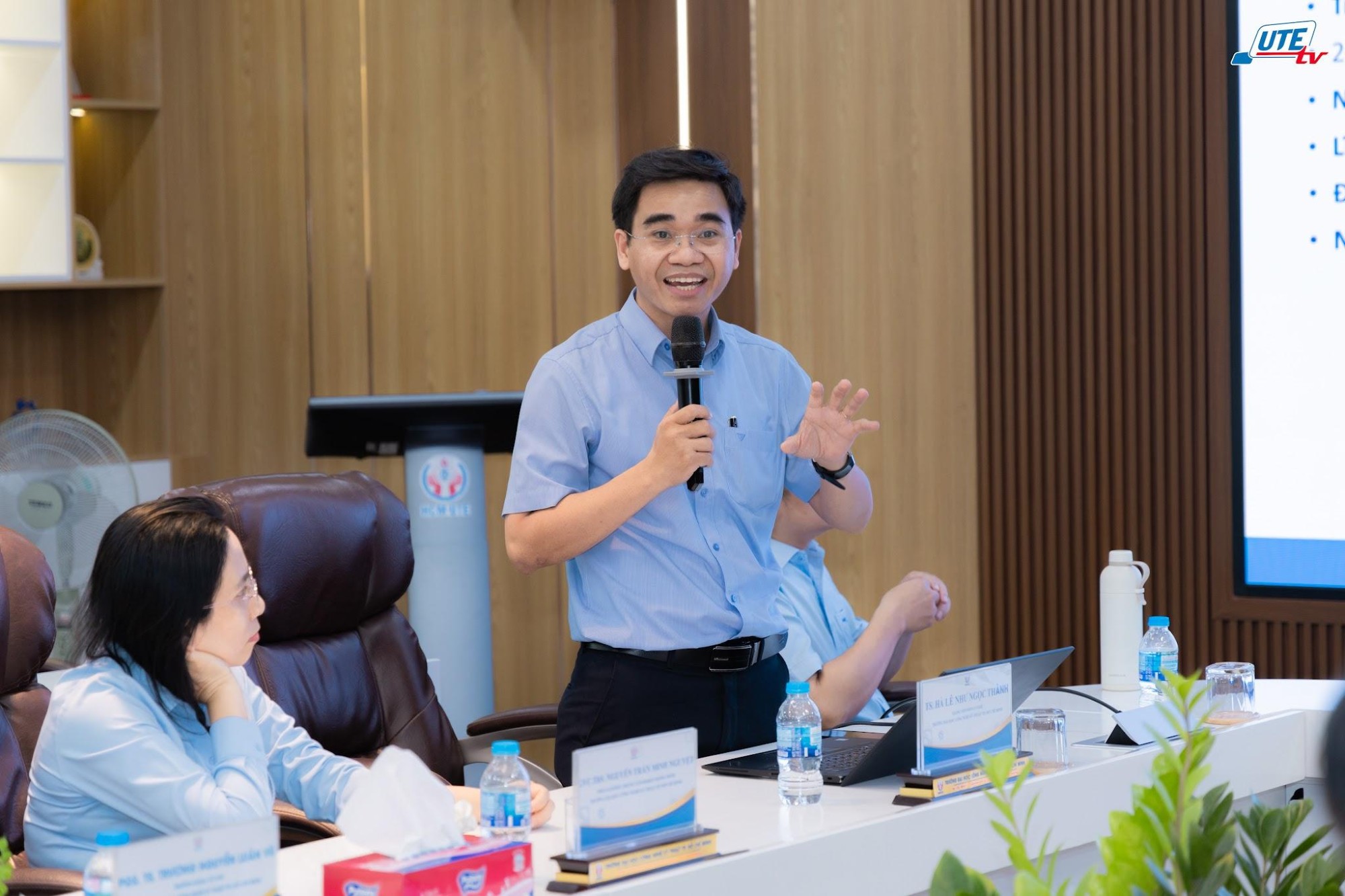
The Smart Robotic Center within the Faculty of Mechanical Engineering was established in 2021 and currently has about 20 members, including three doctoral students and six master’s students. Since 2021, the research group at the Center has published 22 international papers and has developed its own algorithms, flight control software and AI-based image recognition technology.
The group is pursuing several research directions: simulation and safe flight control; navigation and positioning; automatic obstacle detection and avoidance in urban areas; coordination of multiple UAVs on a single mission; air quality monitoring; and support for rescue and firefighting. In addition to the lecturers’ research results, HCM-UTE students have won the international UAV Contest two years in a row (2025 and 2026).
Building on that research foundation, the University’s UAV solutions are gradually being put into practice. In late October 2026, HCM-UTE signed a cooperation agreement with the People’s Committee of Thu Duc Ward for 2026–2030, which includes joint research and piloting of technology solutions for urban management.
Following the presentation of these research results, Senior Colonel Tran Manh Ha expressed interest in the research and technology development capacity of HCM-UTE’s lecturers and students, and proposed that the two sides explore developing a cooperation program on UAVs to build on their expertise and expand practical applications. After the working session, the two sides will continue discussions to agree on specific areas of collaboration. For its part, HCM-UTE will continue to introduce research results and technology products with application potential, thereby broadening opportunities for cooperation in suitable fields.
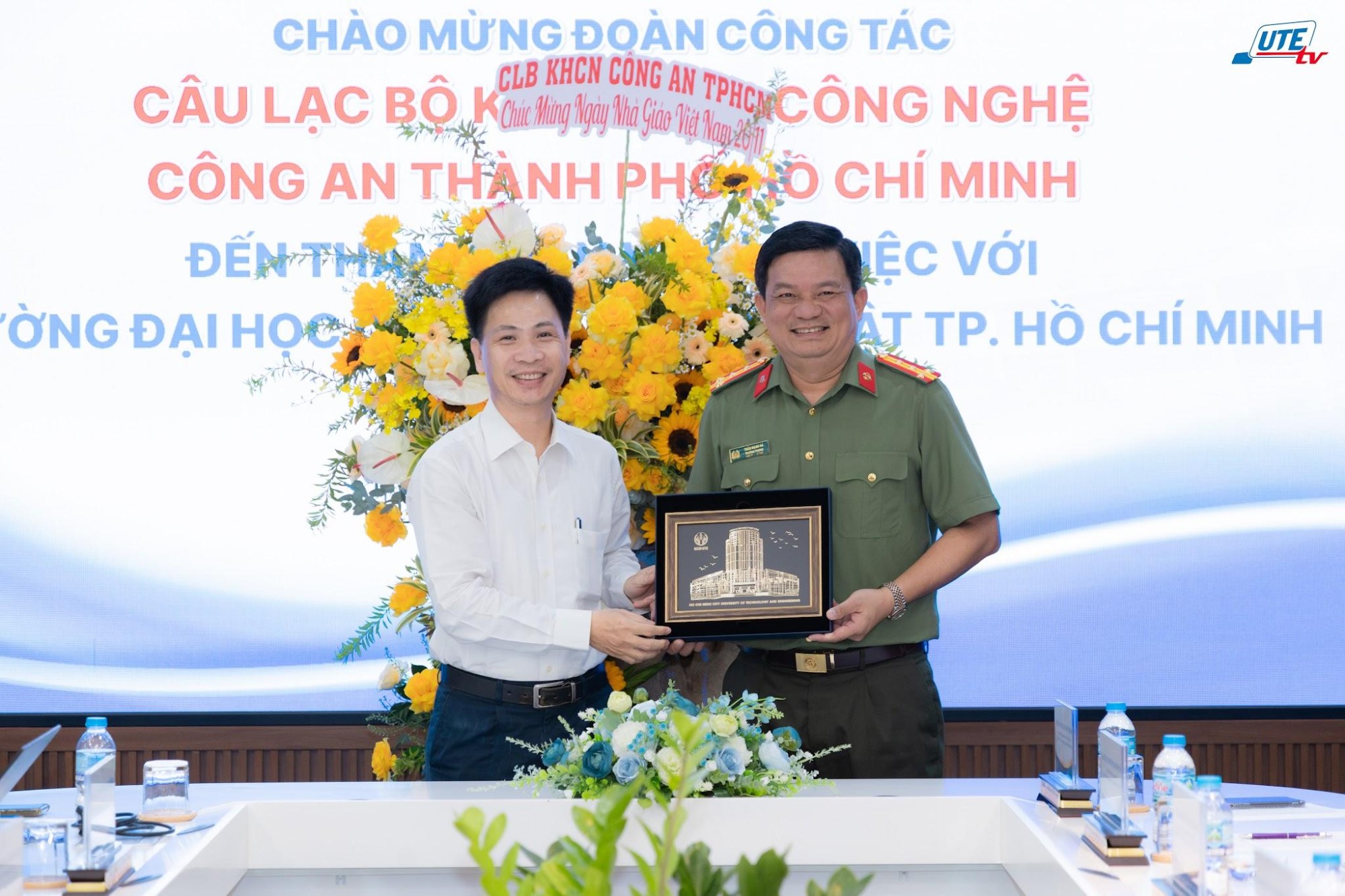
The delegation presented flowers to HCM-UTE’s lecturers and staff to congratulate them on Vietnamese Teachers’ Day (November 20). The University also presented the Club with a commemorative gift to mark the visit and working session.
The working session was an opportunity for HCM-UTE to share its research and technology development capacity with a partner, connect areas of expertise and promote the application of research by its lecturers and students, contributing to the digital transformation and development of Ho Chi Minh City.
About the University’s Name Change: On December 26, 2025, the Prime Minister of Vietnam issued Decision No. 2809/QĐ-TTg, officially renaming Ho Chi Minh City University of Technology and Education to Ho Chi Minh City University of Technology and Engineering (HCM-UTE). The new name reflects the University’s multidisciplinary development strategy, its strengths in technology and engineering, and its current institutional stature. Before 2007, the University was Vietnam’s leading institution for technical teacher education. Following changes to the national higher education program classification system in 2007, the University expanded its focus to technology, engineering, and related disciplines. The name change aligns with Vietnam’s Higher Education Network Development Plan for 2021-2030 with a vision toward 2050, addresses the demand for high-quality human resources in the digital transformation era, and reaffirms HCM-UTE’s role as a national key university in technology and engineering. |
|---|
Text: PP – Photos: UTE TV